Converter and converter stations
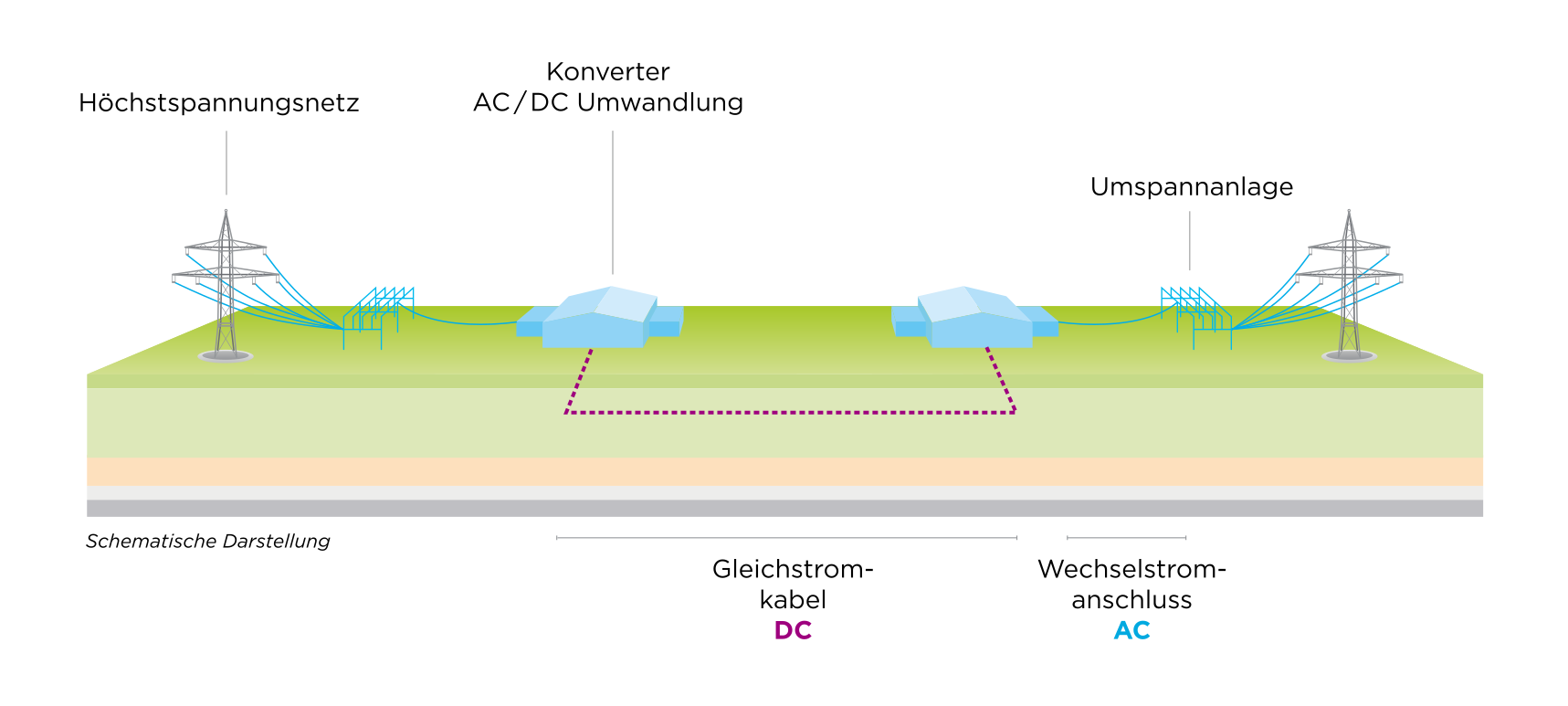
A converter is located at the connection points between DC and AC power lines. It performs two functions: Like a laptop’s power adapter, it converts AC to DC. It can also convert DC back into AC and then feed that power into the transmission network. Because the components of a converter and the associated control electronics must be protected from wind and weather, this asset is housed in a building: Direct current flows on one side of the converter hall, and alternating current on the other. On the alternating current side, transformers ensure compatibility with the 380-kilovolt grid.
The four functional blocks of a converter station
The structure of a converter station is similar to that of a substation – with portals, conductor connectors, pipe connections and transformers. A total of four functional blocks go to make up a converter station:
1. AC terminal
The AC terminal connects the entire converter station to a substation to which the overhead AC line is connected.
2. Converter
The heart of the station is the converter unit housed in the hall. This is where the current is converted from AC to DC or vice versa. A converter is made up of transistors, diodes, capacitors and reactors. In order to convert the current, the transistors are switched on and off alternately in line with precisely calculated patterns.
The transistors and diodes used are electronic power semiconductor devices that heat up during operation. To cool them, they are mounted on aluminium plates around which cooling water circulates. The heated cooling water, which flows in a closed circuit, is itself cooled by externally mounted cooling units.
3. Transformer
The converter is connected to the AC terminal by means of a transformer that matches the grid voltage to the input voltage required by the converter.
4. DC terminal
The DC terminal connects the converter station to the DC power line (overhead line or cable) that runs to the other converter station in the system.